

The High Desert Factor: Why Bend Windows Degrade Faster Than You Expect
Bend averages roughly 12 inches of rainfall per year. That single number changes the entire maintenance equation.
In wetter climates, rain functions as an imperfect but real rinse cycle that interrupts the compounding of surface buildup. In Bend, that interruption mostly doesn't happen. Mineral deposits have months to etch rather than being diluted and rinsed. Pollen bonds without being disturbed. Dust accumulates in layers rather than being periodically cleared.
High altitude amplifies this. At 3,600 feet, UV exposure is meaningfully higher than at sea level, and UV accelerates the adhesion of organic material to glass. Bird droppings, tree sap, pollen — substances that might stay loosely attached at lower elevations — harden faster and bond more aggressively in Bend's sunlight. Perhaps they look removable but resist wiping and require more force than the glass can safely handle without scratching. Or maybe they've been baking on a south-facing window through February and March and are now chemically bonded to the surface in a way that requires a professional-grade treatment to address without damage.
The honest conclusion: in Central Oregon's climate, skipping seasonal window cleaning is not a neutral decision. Each season without proper cleaning is a season of compounding degradation — mineral deposits etching deeper, organic material bonding more firmly, seal wear accelerating from embedded grit. The problem expands the longer it sits.
Juniper Pollen Season: The Failure Mode Most Homeowners Don't See Coming
Between February and April, Western Juniper trees release pollen across Central Oregon at a scale most people underestimate until they've lived through a few seasons of it. It coats everything. And on glass, it doesn't behave the way ordinary dust does.
The critical detail is adhesion. Juniper pollen is fine enough to feel invisible but sticky enough to resist a simple rinse. When it contacts morning dew or even light moisture in the air, it doesn't wash away — it bonds to whatever mineral residue is already present on the glass and forms a film. Perhaps you spray and wipe and the windows look noticeably cleaner. Or maybe the haze that remains is only visible in direct afternoon sunlight from the right angle — which in Bend, is a viewing angle you'll encounter every single day. Or you removed the surface layer of pollen but left the bonded underlayer, which is now harder to address because you've already disturbed the top without treating the adhesion below.
What Central Oregon's Winter Actually Does to Your Windows
Your windows could basically look fine yet be accumulating harm that quietly shortens their lifespan every season. When snow and ice melt on the roof above your windows, that moisture carries dissolved calcium and magnesium from Central Oregon's mineral-rich water supply. As it evaporates, those minerals don't leave with it. They stay, bonding to the glass surface as hard water deposits. Perhaps the deposits are thin enough after one winter that you can barely see them. Or maybe they've already begun a slow etching process on the glass surface that standard cleaning won't reverse. Or the freeze-thaw cycles have driven fine desert dust into your window seals, accelerating gasket degradation from the inside.
None of these failure modes announce themselves the way a cracked pane does. They accumulate silently across seasons until what should have been a routine cleaning job has become a restoration problem — or a replacement conversation.

DIY Window Cleaning Often Fails.
When you attempt to clean your own windows, sometimes you get clear feedback. The paper towels shred and leave lint everywhere. You knock over the bucket. The ladder wobbles and your heart flutters. These are obvious problems with obvious solutions. You can see them happening in real time.
But actually cleaning windows effectively is different. Your effort could look completely successful, yet the results could be fundamentally wrong. The "possible failure window" for DIY glass cleaning is enormous, invisible rather than obvious, and nearly impossible to evaluate in normal lighting conditions. For instance, perhaps you have rinsed your windows off with the hard, mineral laden water that we have in central Oregon, and now there is mineral deposits known as “water stain” which shows up strong when the afternoon sun hits at the right angle. Or you used a standard glass cleaner on those hard water deposits, which doesn't break down calcium bonds — it just smears them thinner and wider. Or you applied too much pressure near the window seals while scrubbing, stressing a gasket that was already compromised by Bend's freeze-thaw cycles. Or you cleaned the visible glass surface but left oxidized buildup in the corners and edges of frames, where moisture intrusion actually starts.
As a result — and this cannot be overstated — a "good enough" approach to window cleaning in Central Oregon does not work and only leads to accelerated glass deterioration and premature replacement costs. Difficulty is inevitable when cleaning windows in Bend's climate, but it can be reduced through proper timing, professional-grade solutions, correct technique, and systematic attention to the specific failure modes this environment creates. The qualities most strongly correlated with well-maintained windows are methodical seasonal care and meticulous attention to what your glass is actually being exposed to.
Why Professional Window Cleaning Is the Methodical Approach
The right solution here isn't faster or more energetic DIY cleaning. It's systematic professional care that addresses the actual failure modes in the right order.
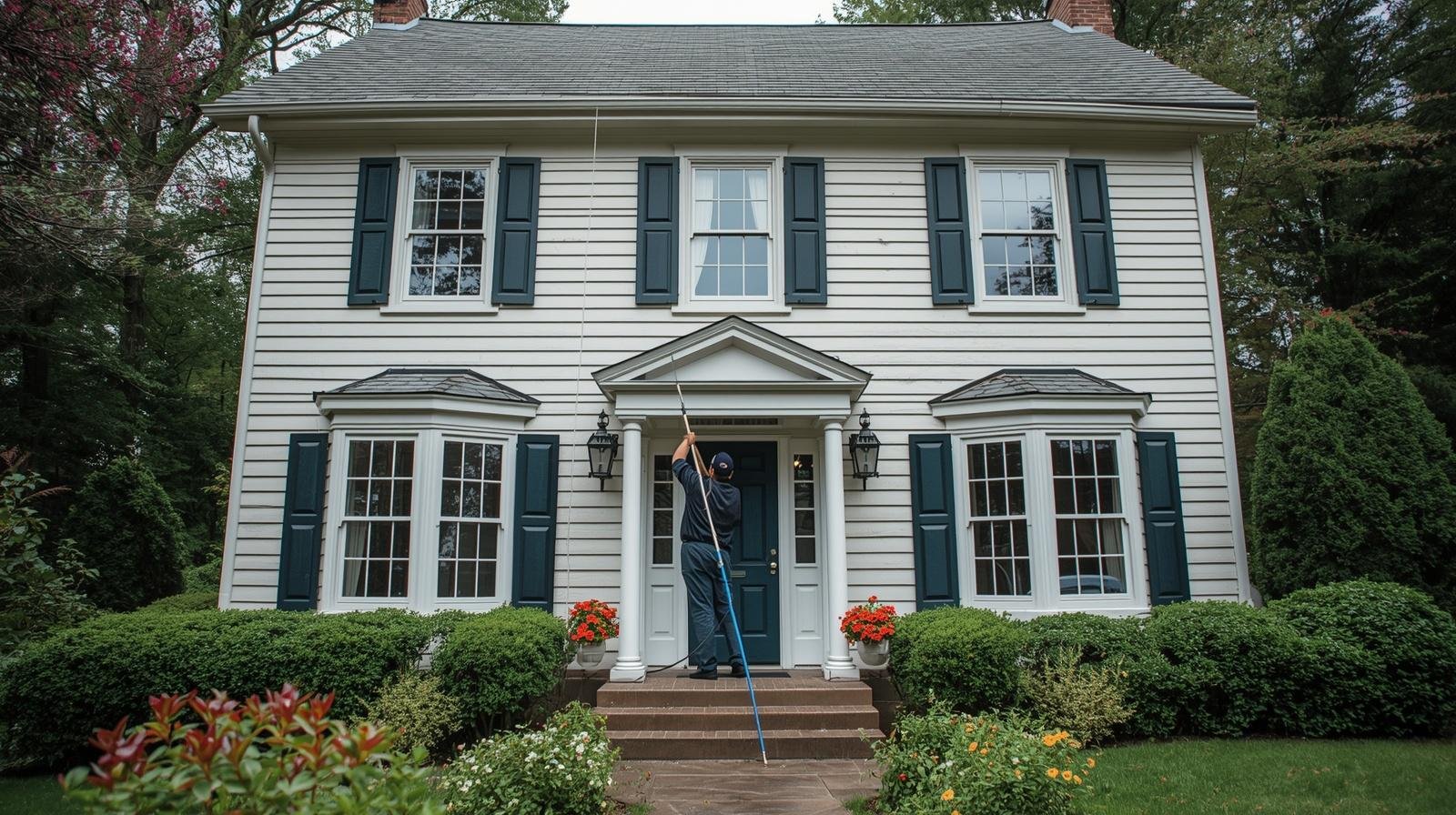
Pollen film requires a surfactant that breaks adhesion rather than redistributing it. Hard-to-reach upper windows require proper equipment, not improvised ladder work that creates fall risk on top of cleaning risk.
At Sunshine Window Cleaning, we've been working in Central Oregon since 1995. That's nearly thirty years of direct, specific experience with Bend's mineral water, its juniper pollen, its UV intensity, its desert dust, and the failure modes all of those create for your glass. We offer residential and commercial window cleaning along with gutter cleaning, and we provide free estimates on every job — because the right approach starts with actually understanding what you're dealing with before committing to a plan.
The Right Time to Act Is Before the Problem Becomes Obvious
The most expensive window problems in Bend are the ones that looked manageable for too long. A mineral deposit that could have been cleared in year one becomes an etching problem in year three. A seal stressed by a few seasons of embedded grit fails in year five. A pollen film that seemed like cosmetic haze turns out to have been concealing early-stage oxidation on an aluminum frame.
These aren't hypothetical failure modes. They're the predictable consequences of Central Oregon's climate operating on glass that isn't being systematically maintained.
Contact Sunshine Window Cleaning today for your free estimate! Spring scheduling fills up quickly, and your windows have already been through a Central Oregon winter.
Sunshine Window Cleaning proudly serves Bend and the greater Central Oregon area. Residential and commercial window cleaning and gutter cleaning services available. Free estimates on all jobs.